How to Sound Conversational When Reading a Script
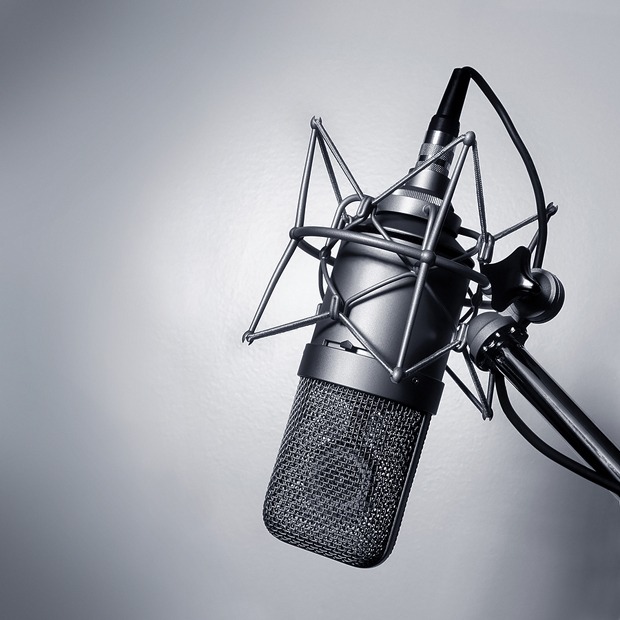
A voice-over is a narration done by a circulate reporter, usually reading from a script. The reporter's voice is recorded over a sequence of video clips that tell a story.
A standup is when a television reporter appears in front of the camera to narrate role of a story – most frequently at the first to set up the story, or at the very stop.
Frequently the standups and vocalism-overs are read from a script the reporter has prepared beforehand.
Generally reporters write their scripts after shooting the video for a story, and and so get together the clips to fit the script.
Reading that script is an art that requires both smooth delivery and emphasizing the primal points in the story.
Here are some tips for doing these standups and voice-overs.
Warming Upward
Read through the script several times to get familiar with it and get over any bumps in your delivery during practice – not while you're recording.
Look particularly for words that are going to exist hard to pronounce or that you lot might stumble over. Repeat those words out loud to yourself until you feel comfy with the pronunciation. Or endeavor doing exaggerated pronunciations of a word several times to get more at ease with just maxim it naturally.
Do some facial stretches – opening your mouth wide to loosen upwards.
Endeavor bustling or singing a song to get your vocalisation alive and set it for using a range of pitches when yous characterize your story.
Say some archetype tongue twisters out loud – like "Peter Piper picked a peck of pickled peppers" – and emphasize each of those words.
To loosen up and sound more than conversational, try laughing through the copy. It won't make whatever sense but it volition warm y'all up and get y'all to be yourself.
Go to extremes when practicing your script to recoup for problems you take with your voice. Thus you might effort reading the script in a very loud vocalization if your trouble is having too soft a voice.
For standups, relax your nerves by shaking your hands from the wrists. Also practice the facial stretches and take some deep breaths.
Do deep breathing exercises – breathing in quickly and deeply several times, and being sure to force out all the air.
Identifying Operative Words
Read through your script and underline or highlight the "operative" words – the words that are essential to telling the story.
These are words which, if yous simply read those words rather than the complete sentences in the script, would all the same give the listener the gist of the story and what it's about. They're the words the listener needs to hear to stay with the story.
Usually they are the classic who-what-where-when-why-how words – nouns, adjectives, adverbs, titles, names.
Proper names in particular always should be identified equally operatives the first time they appear in a script.
Emphasizing Operative Words
One time you've identified the primal words that tell your story, you need to add accent to those words when reading your script.
Y'all do that in these four ways:
- Volume – Increase or decrease the book of your vocalism when saying an operative discussion. Emphasizing a give-and-take by making your vox louder is too called "punching" it.
- Pitch – Alter the pitch of your voice when y'all say an operative word, going upward or down the scale, high and low, falsetto to baritone
- Rhythm – Change the rhythm of your vocalization – the space betwixt the words – when maxim an operative word. Pause earlier the word, or later on the discussion, or both, to emphasize it. A break is especially effective before a word that'southward complex or highly technical in nature. A interruption is too effective when y'all're introducing a new thought in a script.
- Tempo – change the tempo or speed of your commitment to emphasize an operative word. You might pick up the tempo where the copy is less of import, and then ho-hum downward when yous hit a section with more operative words to emphasize them. Or y'all might stretch out a vowel in an operative discussion.
Delivery – Voice-overs
Also marking the operative words for emphasis, yous too need to mark your breaths on the re-create – where y'all're going to pause to have a breath.
Longer sentences are going to need a breath, usually taken where a comma appears in the script or where new information is introduced.
Only don't be likewise obedient to punctuation and don't pause for a breath after every sentence. Look for other places within a sentence where you can interruption for emphasis and also take a breath.
Similarly don't just pause at the end of a sentence. Wait for other natural places – such as the operative words within a sentence – to pause.
Endeavour to sound conversational when you talk – not like you're reading from a script or lecturing to someone. Tell the story, don't read it.
Call up most how you lot would talk with a group of friends and tell a story to them – so adopt that tone when reading your script. Exist as animated equally y'all would telling a story to a friend. Stay in the story while you're reading it. Think nearly what y'all're proverb.
When reading a listing of things, vary the pitch and the rhythm of each element of the list to add emphasis and brand the list interesting. Don't sound like you're merely reading a listing in a monotone.
Open your mouth wide – both laterally and vertically, similar a singer. Your voice will be louder and richer if you practice.
Don't close your mouth at the end of a sentence. When yous're talking that will create a popping audio when you lot open your mouth again to say the first word in the adjacent judgement.
Go on your chin parallel to the floor – don't look down as that affects the sound of your voice.
You might try frowning when yous talk to add potency and brownie to your vox. If yous pout you are more serious, and your vocalism subconsciously changes to a more serious tone, making you sound more credible.
Don't "throw abroad" the final sentence of your script past letting your vocalism trail off just because y'all're at the end of the script.
Delivery – Standups
When doing a standup where you're reading from a script, agree the script upwardly fairly high – merely beneath your chin but off camera – then your optics aren't jumping up and downwardly between the photographic camera and the script as much as you read.
Don't tilt your caput – try to look directly on into the photographic camera and go along your chin parallel to the floor. If yous your head is tilted off to the side or upwards or downwardly, it gives the viewer the appearance of deception – why isn't the reporter looking right at me?
Stand directly and don't slouch – the camera will simply amplify bad posture similar a slouch.
Don't breath in by moving your chest and shoulders. Concentrate instead on breathing through your diaphragm and stomach. This volition brand your voice sound less nasal and also reduce the motion acquired when your chest heaves with each breath.
Try holding your hand on your stomach to make sure that yous can experience yourself animate in and out from the diaphragm surface area, rather than the breast.
Keep your feet slightly autonomously and don't move them when yous talk. Peculiarly avert shifting your weight from one leg to the other.
Besides avoid moving your shoulders. Instead put the free energy from all that movement into facial expressions and paw gestures.
Go along your hands loose and at your sides – don't put them in your pockets or clasp them together.
Gesture with your hands while you lot're talking. This is ane way to make the story sound more conversational.
Use facial expressions, such as raising your eyebrows, to accentuate your face when y'all're emphasizing a particular point. This once again is what you'd exercise in a casual chat to make your standup look more natural.
Most this Tutorial
This tutorial is based on lectures Marilyn Pittman gave in multimedia skills classes at the UC Berkeley Graduate School of Journalism. It was written by Marilyn Pittman and Paul Grabowicz.
Republishing Policy
This contentmay non be republished in print or digital form without express written permission from Berkeley Avant-garde Media Found. Please see ourContent Redistribution Policy.
© 2022 The Regents of the University of California
Source: https://multimedia.journalism.berkeley.edu/tutorials/standups/

Post a Comment for "How to Sound Conversational When Reading a Script"